- Jan 28
Hamstring injury and pelvic misalignment
- Deniece Oates
Every hamstring injury I've seen involves this underlying problem
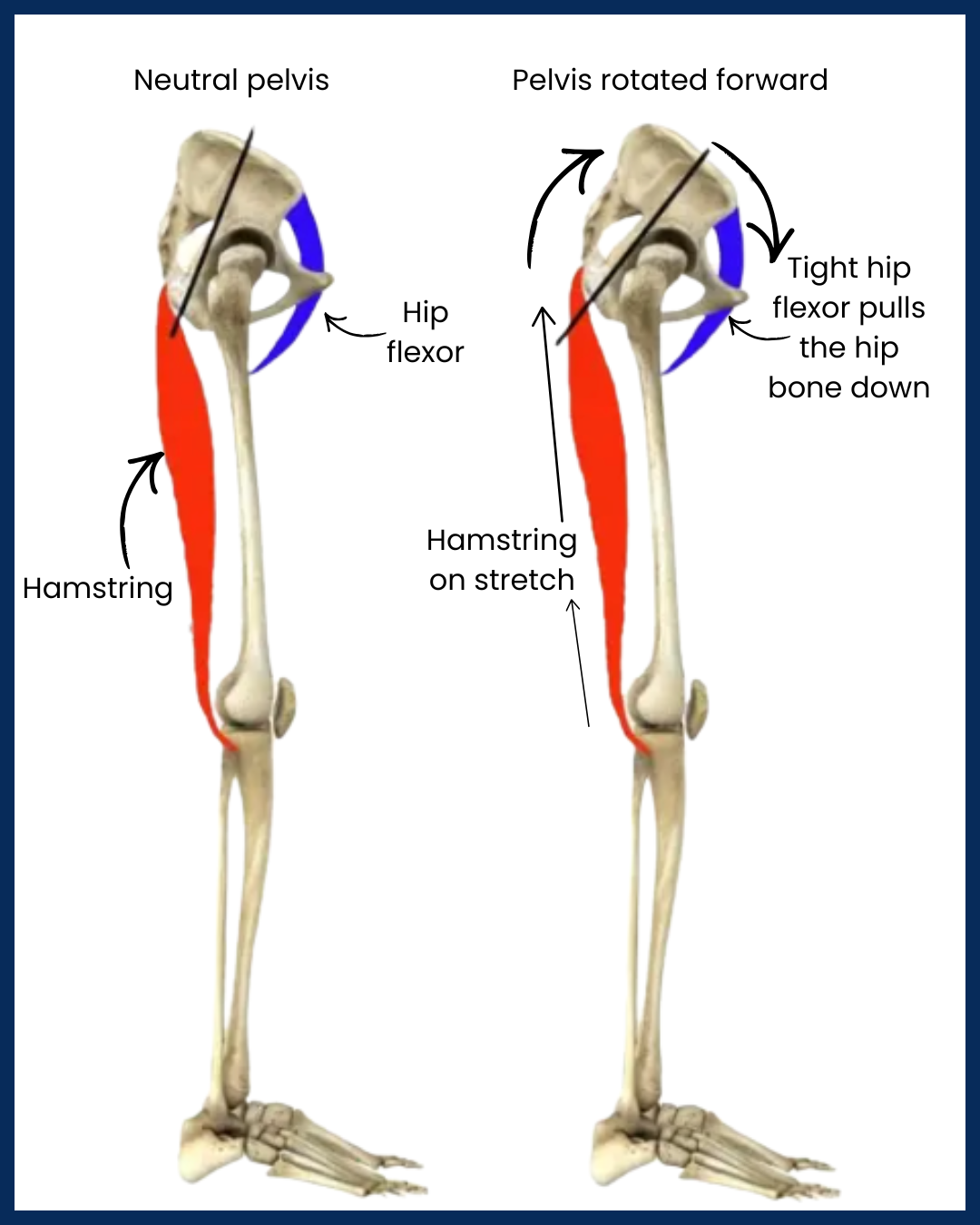
A common cause of hamstring injury is when the bones of the pelvis are not lined up correctly. One aspect of this misalignment is the hip bone on one side rotates forward and gets stuck in that position. This usually occurs because the hamstring muscles in the back are not strong enough to balance the hip flexor muscles in the front, which become tight from overuse. This problem is common in athletes who kick, sprint, change directions often, or mostly use one leg.
How hip bone position affects the hamstrings
When the hip flexor muscles are tight, they pull the front of the hip bone downward. This causes the back part of the hip bone—where the hamstring muscles attach—to move higher. While the bone remains in this position, the hamstring muscles are over-stretched. A muscle that is constantly stretched is easily irritated during normal daily and lower intensity activity and more likely to tear during fast, powerful movements and when fatigued.
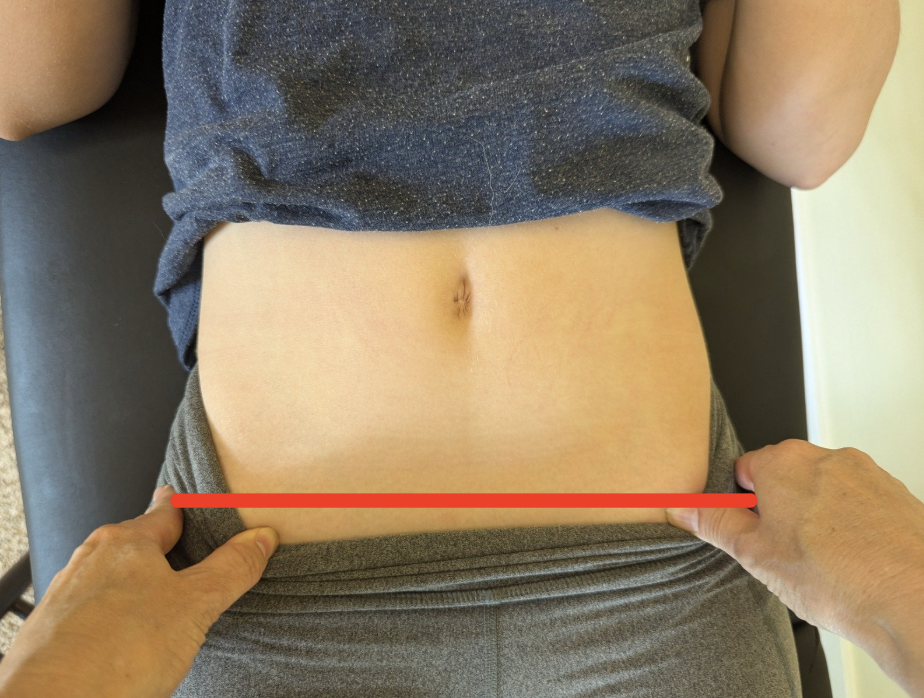
A hip bone that is rotated downward in the front can be seen from the outside by finding a bony landmark called the ASIS, where the hip bone curves downward in the front. With a thumb on each ASIS, you can look to see if one is lower than the other one.
When a hip bone is rotated downward in the front, this shifts the position of the socket that the leg bone fits into, which causes the leg to appear longer on that side than on the other side.
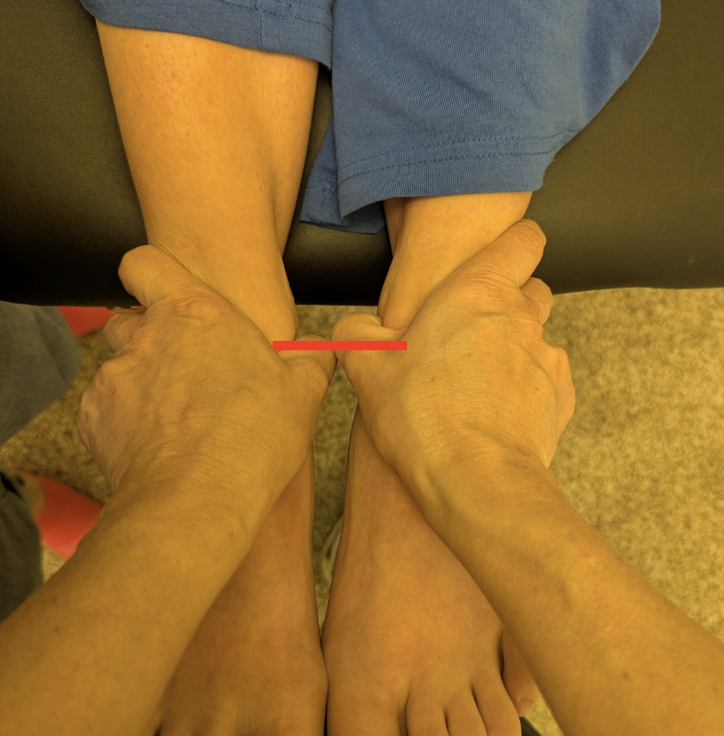
Having one leg sitting longer than the other one creates uneven movement with every step.
⚠️ Key Point
A forward tilted hip bone puts extra stress on the hamstring.
Many athletes get used to this forward-rotated hip position and it doesn't really bother them until the hamstrings are engaged in intense activity. Many medical providers do not pay attention to this hip bone position, so it doesn’t get addressed during recovery from injury. This is one reason hamstring injuries often come back within weeks of returning to sports.
🚨 Common Mistake
Treating the muscle but not fixing the hip position increases the risk of re-injury.
An injured hamstring will heal better when the hip bone is returned to a neutral position
When a hamstring injury happens, it is important to bring the hip bone back to a neutral (balanced) position. This helps the hamstring irritation calm down more quickly and therefore heal faster. Because tight muscles can pull the hip bone out of place again, the hip bone position needs to be checked often. At the same time, athletes should work on strengthening the hamstrings and stretching the tight hip flexor muscles.
✅ What Helps Healing
Neutral hip position + strengthening hamstrings + stretching hip flexors.
Over a few weeks of steady strengthening, the hip bone can become more stable. It’s normal for the bones of the pelvis to shift slightly with the movement of the legs and trunk. Stronger hamstrings help handle this normal shifting without it causing pain or injury.
🔁 Important to Remember
Some shifting of pelvic bones is normal. Strong hamstrings helps control that movement.
Neutral position of the pelvic bones helps both prevent muscle injuries and increases performance level
Regularly checking pelvic alignment and keeping the bones as close to neutral positioning as possible helps prevent future hamstring injuries—as well as injuries to other muscles attached to the pelvis. A neutral pelvis also allows the hips and trunk to move through their full range of motion. This helps athletes run faster, move more powerfully, and perform at their best. When the bones of the pelvis are out of neutral alignment, movement is limited, which in turn limits power and speed. Keeping the pelvis neutral supports both health and top performance.
🏃 Performance Tip
A neutral pelvis supports speed, power, and pain-free movement.
FREE GUIDE!
How to Care for ANY Sports Injury in the Crucial First 24-72 Hours
In this free guide, I walk you through how to tell if an injury needs immediate medical care and give you simple and easy step by step instructions for what to do at home for any other injury during this important time. I’ll also give you some tips for how to decide what comes next, based on the signs and symptoms you’re seeing with your athlete.
Don’t get lost in stress and worry about your athlete’s injury or ignore it and hope it will just go away. Grab my FREE GUIDE today to level up your ability to take care of your athlete!