- Jul 17, 2025
High Ankle Sprain Comparison: Diligent application of Rest, Ice, Compression and Elevation (RICE) in the first 72 hours vs not so diligent application
- DENIECE OATES
In this article I’m going to make the case for really diligently following the principles of Rest, Ice, Compression and Elevation (RICE) in the first 24-72 hours after any sports injury.
Rest, ice, compression and elevation are all interventions for the purpose of damage control. They slow blood flow into the injured area, which allows the body to more efficiently clot damaged blood vessels, limiting swelling and bruising. This is important, because swelling causes pain and limited range of motion, and the more you have, the longer it takes for the body to cycle it out.
All that to say, diligently applying rest, ice, compression and elevation within the first 24-72 hours after any sports injury will limit pain and swelling that’s allowed to build up, which decreases healing time because the body will spend less time getting rid of all that fluid outside of the circulatory system. Having less pain and swelling also helps speed things up, because the athlete can return to regular everyday function more quickly, and is able to more fully engage in a productive rehabilitation process. And the mindset benefits? Anytime an athlete feels and sees progression, it affects their attitude enormously – and that helps speed up the healing process too.
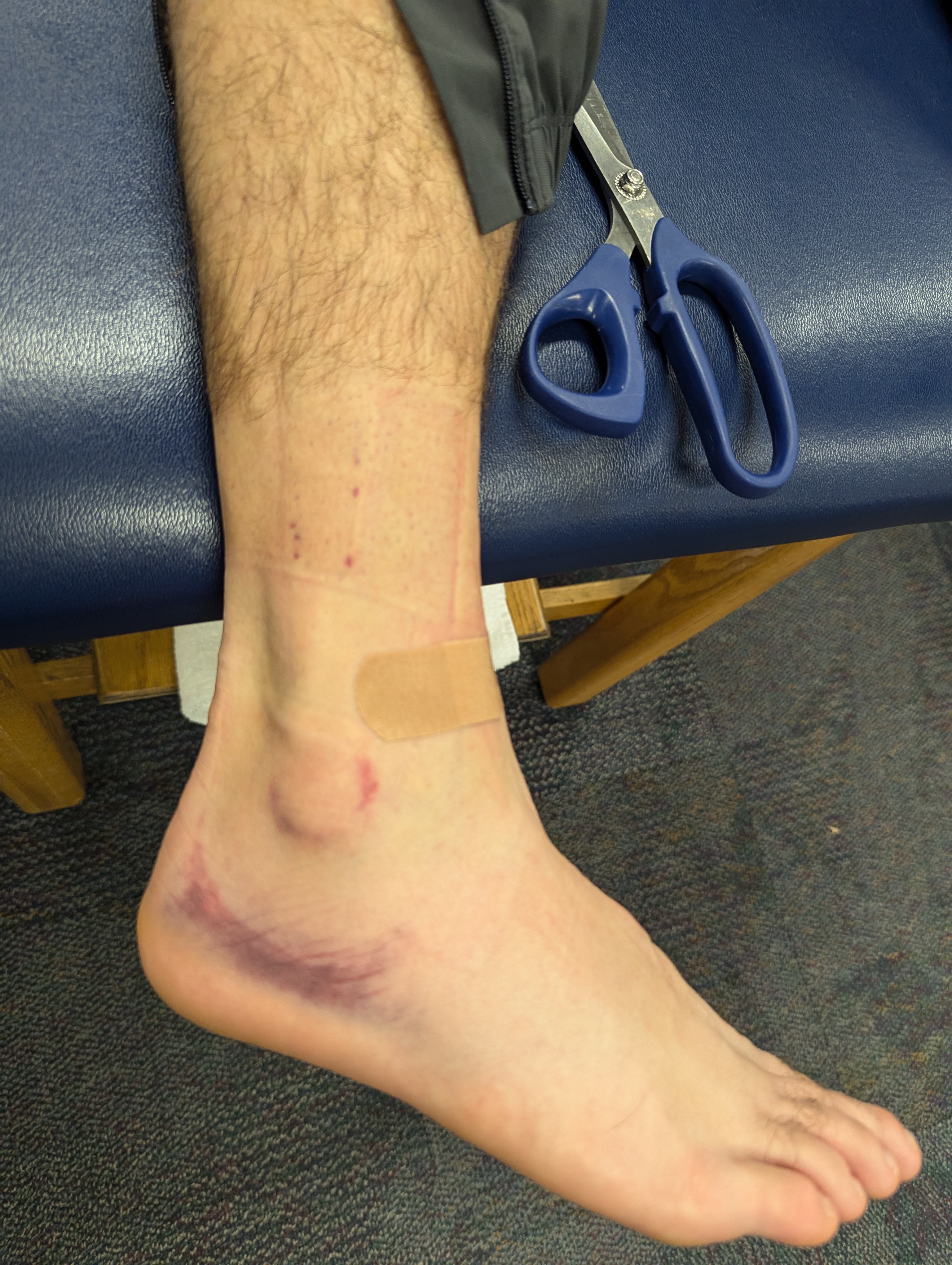
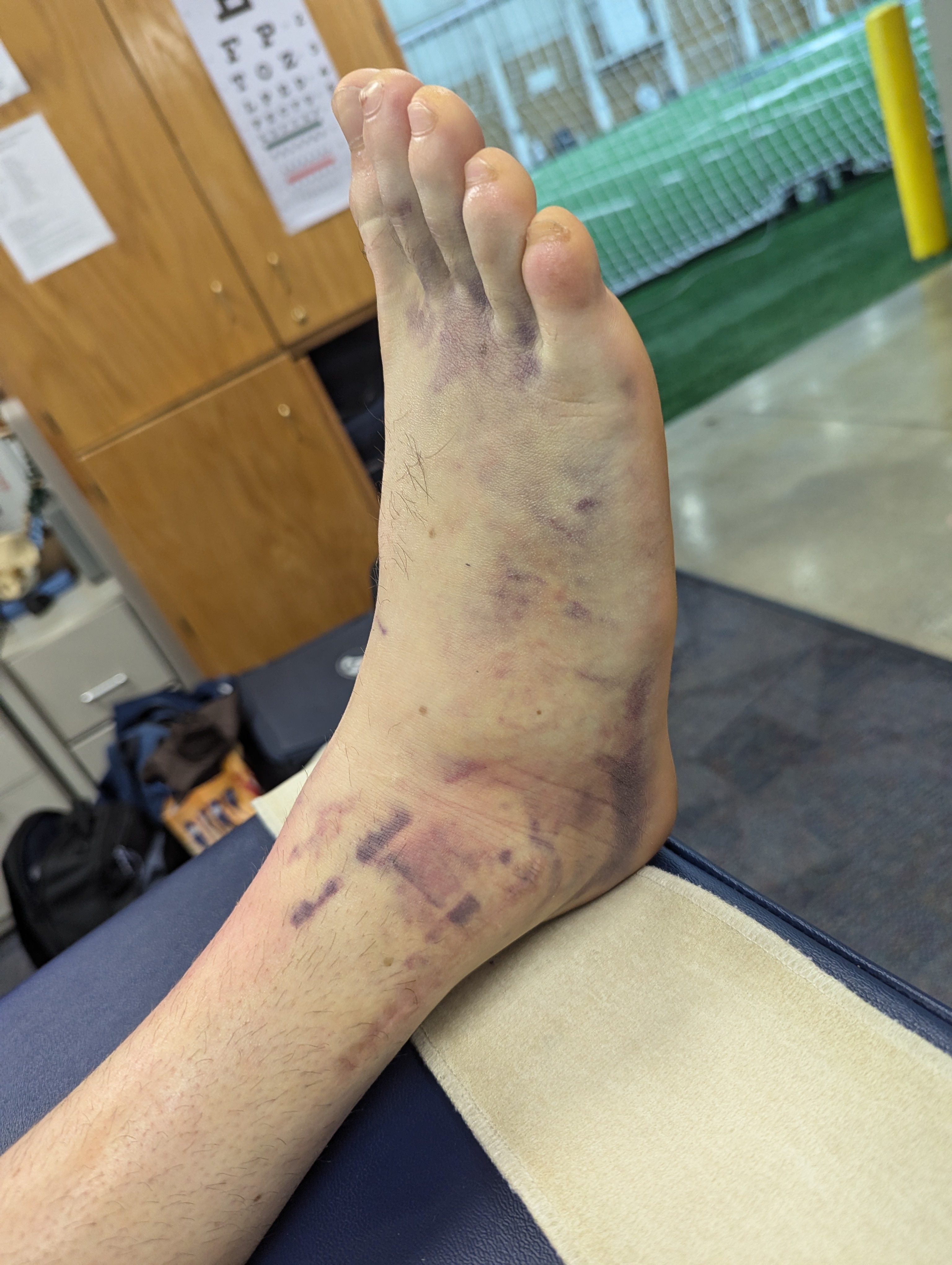
I have a high ankle sprain with two soccer players as a case in point. They sustained about the same severity of injury. Here are an immediate post injury photo and a photo from 3 days later for each of them.
High ankle sprain 1 - immediately post injury
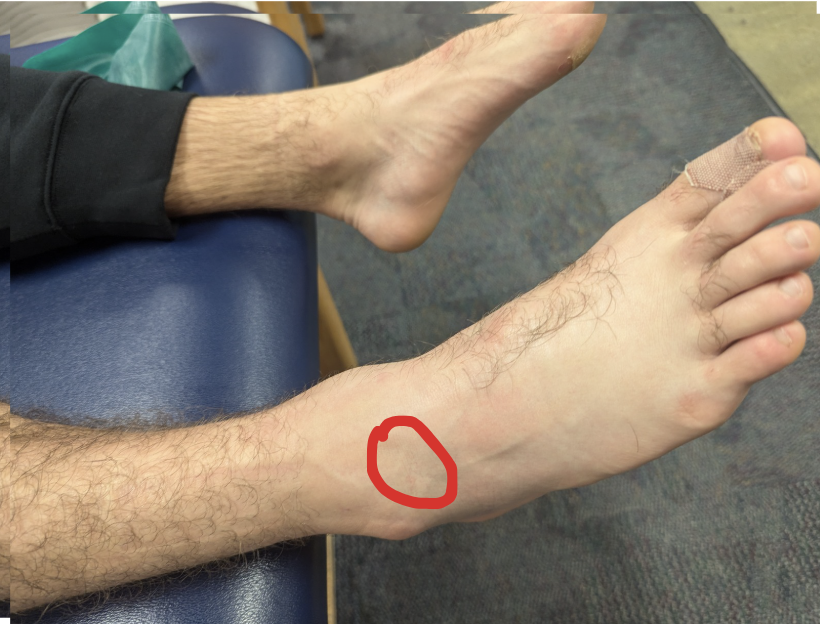
Diligent application of RICE:
Stayed off of it, wore a compression bandage with a felt horseshoe, iced on schedule as much as possible and elevated his ankle when sitting or laying down as much as possible
Minimized swelling
Swelling stayed out of the lower part of the foot
Swelling was minimized in the joint space due to wearing a felt horseshoe
Regained normal range of motion much quicker
Regained normal walking motion much quicker
Was able to move through rehabilitation exercises more quickly
Returned to partial practice with tape within two weeks
Returned to full practice and game play with tape within three weeks
High ankle sprain 1 - 3 days post injury after diligent application of RICE
High ankle sprain 2 - immediately post injury
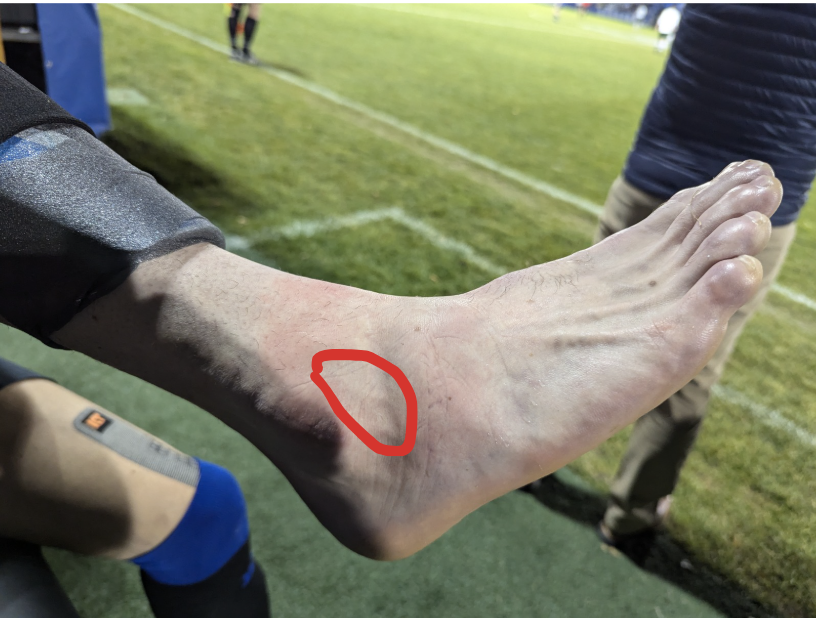
Not so diligent application of RICE
Stayed off of it, started out with a compression bandage and a felt horseshoe for the first night, left the wrap somewhere and went without it for the next few days, iced sometimes, and elevated his ankle when sitting or laying down
Large amount of swelling
Swelling spread throughout the foot and lower leg, as well as pooled in the joint space
Heightened pain sensitivity of skin due to pressure from swelling
Delayed movement through rehabilitation exercises
Took much longer to regain normal range of motion
Took much longer to regain normal walking motion
Was able to play minimal minutes with tape in the post season after 4 weeks
High ankle sprain - 3 days post injury after not so diligent application of RICE
The key here was wearing the compression wrap
The athlete who was diligent about wearing the compression wrap and the felt horseshoe was able to minimize the swelling that occurred. While he had some, of course, we really didn’t have to take the time to work on getting it out of the lower foot and there wasn’t so much pooled in the joint space where it is more difficult to move swelling out of. The athlete was able to move through rehabilitation exercises quickly and move back into practice after only a few weeks. He wore ankle tape for the rest of the season and continued to do exercises regularly, but had no set backs or problems with re-injury.
The athlete who was not so diligent about wearing his compression wrap, having left it somewhere for a few days over the weekend, had a lot of swelling build up in the lower part of his foot, lower leg and in the joint space. It really limited his ability to regain range of motion, walk normally and move through rehabilitation exercises, so he was much more dysfunctional in regular life than the other athlete, as well as much slower to return to play.
FREE GUIDE!
How to Care for ANY Sports Injury in the Crucial First 24-72 Hours
In this free guide, I walk you through how to tell if an injury needs immediate medical care and give you simple and easy step by step instructions for what to do at home for any other injury during this important time. I’ll also give you some tips for how to decide what comes next, based on the signs and symptoms you’re seeing with your athlete.
Don’t get lost in stress and worry about your athlete’s injury or ignore it and hope it will just go away. Grab my FREE GUIDE today to level up your ability to take care of your athlete!