- Apr 25
How to Tell if Pelvic Misalignment Is Causing Your Athlete’s Muscle Pain
- Deniece Oates
Pelvic misalignment is commonly behind lower body muscle discomfort and injuries, though it’s often overlooked. Basically, any muscle that attaches to the pelvis—low back, hamstrings, groin, hip flexors, lower abdominals, IT band, and hip internal and external rotators—is affected by the position of these bones. How could they not be?
There’s a common assumption that the bones of the pelvis naturally stay where they’re supposed to be. But when you think about the motions athletes perform—and the forces they’re exposed to—it’s not hard to see how those bones can get pulled out of alignment.
When the pelvis is misaligned, muscles are forced to work from less efficient angles. Some muscles are recruited to help with movements they normally wouldn't assist with. Some sit in a stretched position, while others stay shortened. Over time, those muscles get irritated, overstressed, and are much more likely to be injured.
Pelvic misalignment can also limit range of motion, power, and speed—so it’s not just about pain. It can directly affect performance too.
So how do you know if pelvic misalignment is contributing to your athlete’s muscle issues?
Here are 3 quick and simple ways to check:
1. Check Hip Bone Height (ASIS)
Have your athlete lie flat on their back.
Find the bony points at the front of the pelvis (called the ASIS—the spot where the hip bone curves downward).
➡️ Does one side sit higher than the other?
If yes, that’s a clear sign of pelvic misalignment.
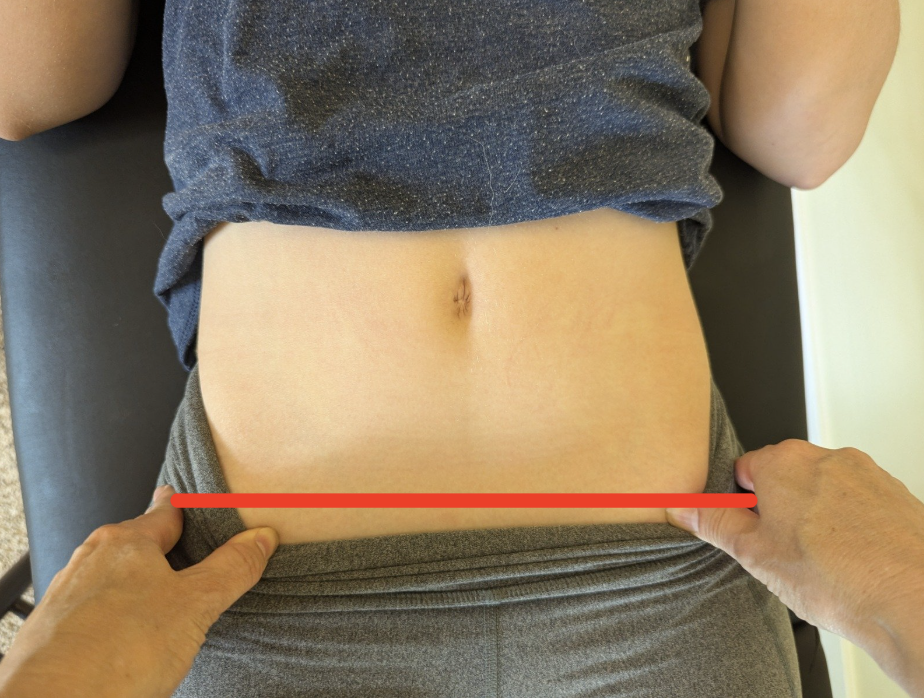
In this photo, the right ASIS is lower than the left
2. Compare hip bone distance from the midline
Look at those same bony points again.
➡️ Is one side farther away from the belly button than the other?
If yes, that also indicates misalignment.
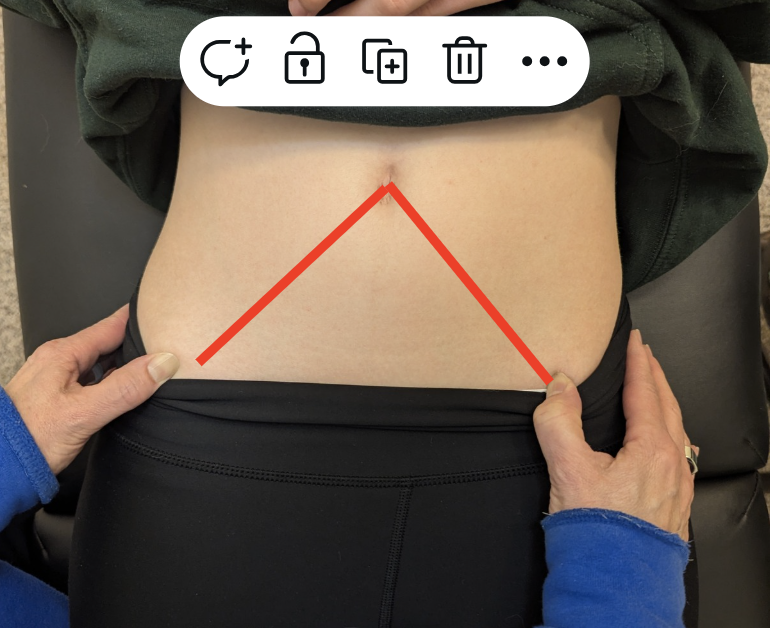
Here, the hip bones are not equidistant from the midline - either one is out too far, or one is in too far. It could be that both are problematic.
3. Check Leg Length
With your athlete still lying on their back, hold their legs together at the ankles and compare the leg lengths.
➡️ Do the legs look uneven?
If the legs are uneven and one hip bone was lower in Step 1, that strongly reinforces pelvic misalignment.
If the hip bones were level in Step 1 but the legs are still uneven, your athlete may actually have a true leg length difference—which can also contribute to muscle pain.
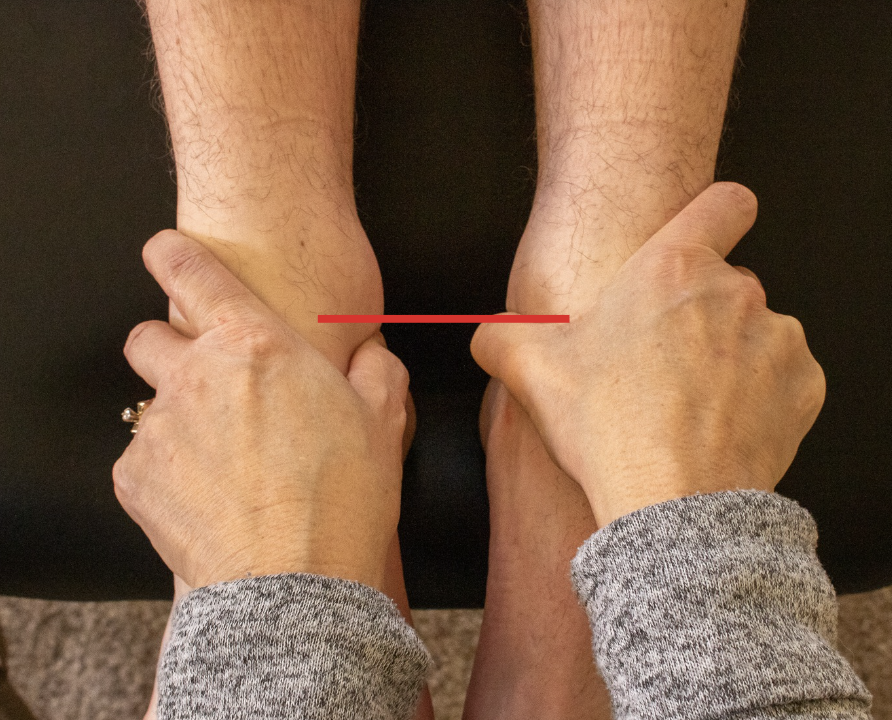
Here, the right leg appears to be longer than the left
What Can You Do About It?
If your athlete has pelvic misalignment, here are some options:
Work with a doctor who is a DO (Doctor of Osteopathic Medicine), not an MD
Work with a physical therapist
Work with a Certified Athletic Trainer
Work with a chiropractor (helpful for the spine, but typically not focused on repositioning the hip bones)
Important to Understand
This is not a one-time fix.
Even if the pelvis is adjusted, your athlete is still training, sprinting, cutting, and putting force through their body every day. That means misalignment will come back - often.
Another Option to Consider
You can learn how to do this yourself, rather than taking your athlete to someone else for treatment. It's actually fairly simple and straight forward, and will save you time, money and stress - not to mention it will save your athlete a lot of pain and lost playing time.
You can learn:
How to recognize misalignment
How to assess the position of the pelvis
How to safely adjust it
How to care for the muscles involved
Maintenance and prevention strategies
Join the waitlist for my online course, The Athlete's Lower Body and Core Muscle Pain Solution below!
FREE GUIDE!
How to Care for ANY Sports Injury in the Crucial First 24-72 Hours
In this free guide, I walk you through how to tell if an injury needs immediate medical care and give you simple and easy step by step instructions for what to do at home for any other injury during this important time. I’ll also give you some tips for how to decide what comes next, based on the signs and symptoms you’re seeing with your athlete.
Don’t get lost in stress and worry about your athlete’s injury or ignore it and hope it will just go away. Grab my FREE GUIDE today to level up your ability to take care of your athlete!