- Mar 13
The most underrated tool for treating sports injuries at home
- Deniece Oates
Elastic bandages may seem frumpy and old school, but they are one of the most useful tools you can have when someone gets hurt.
With any injury, blood vessels are damaged and blood leaks into the surrounding tissues causing swelling and bruising.
The body’s first priority is to stop the bleeding through the process of clotting. This process is much easier and faster if blood flow is restricted to some degree through the damaged area. One way to slow the flow of blood is by applying compression from the outside. The pressure created by a compression bandage limits the expansion of blood vessels, and the body naturally diverts blood to other unrestricted areas.
Any blood that leaks into the surrounding tissue due to an injury has to be cleared out through the lymph system. This system is great, but it takes time. Limiting how much blood leaks out will ultimately speed up the healing process, because there is less fluid that has to be cleaned up.
Wearing a compression bandage also helps push fluid out of the injured area as healing continues. The gentle pressure directed toward the heart, helps the lymph system move fluid upward and away from the injury.
A compression bandage also provides some support to the injured area. which aids in putting weight on it, moving around and using it.
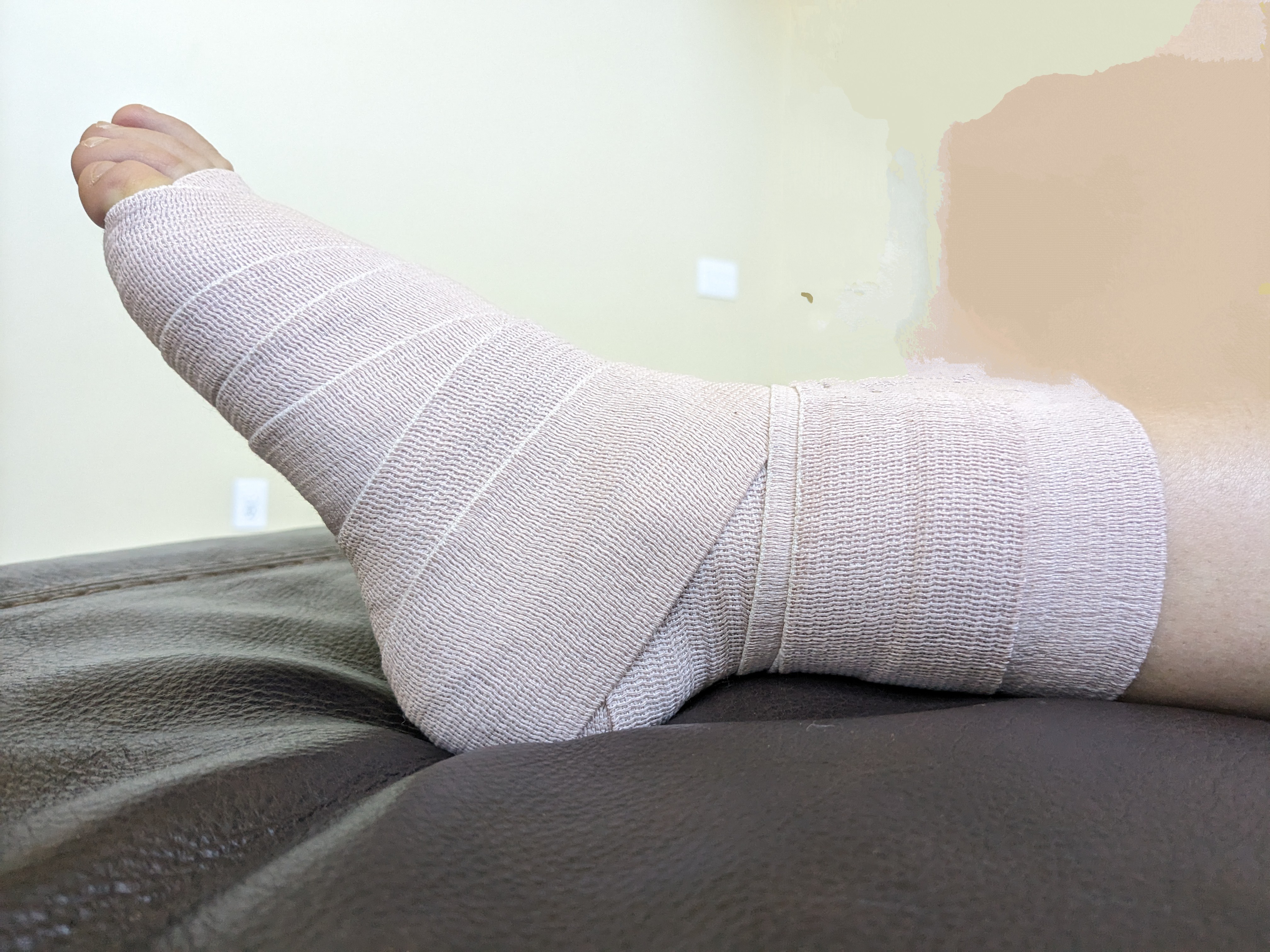
How to Apply an Elastic Bandage
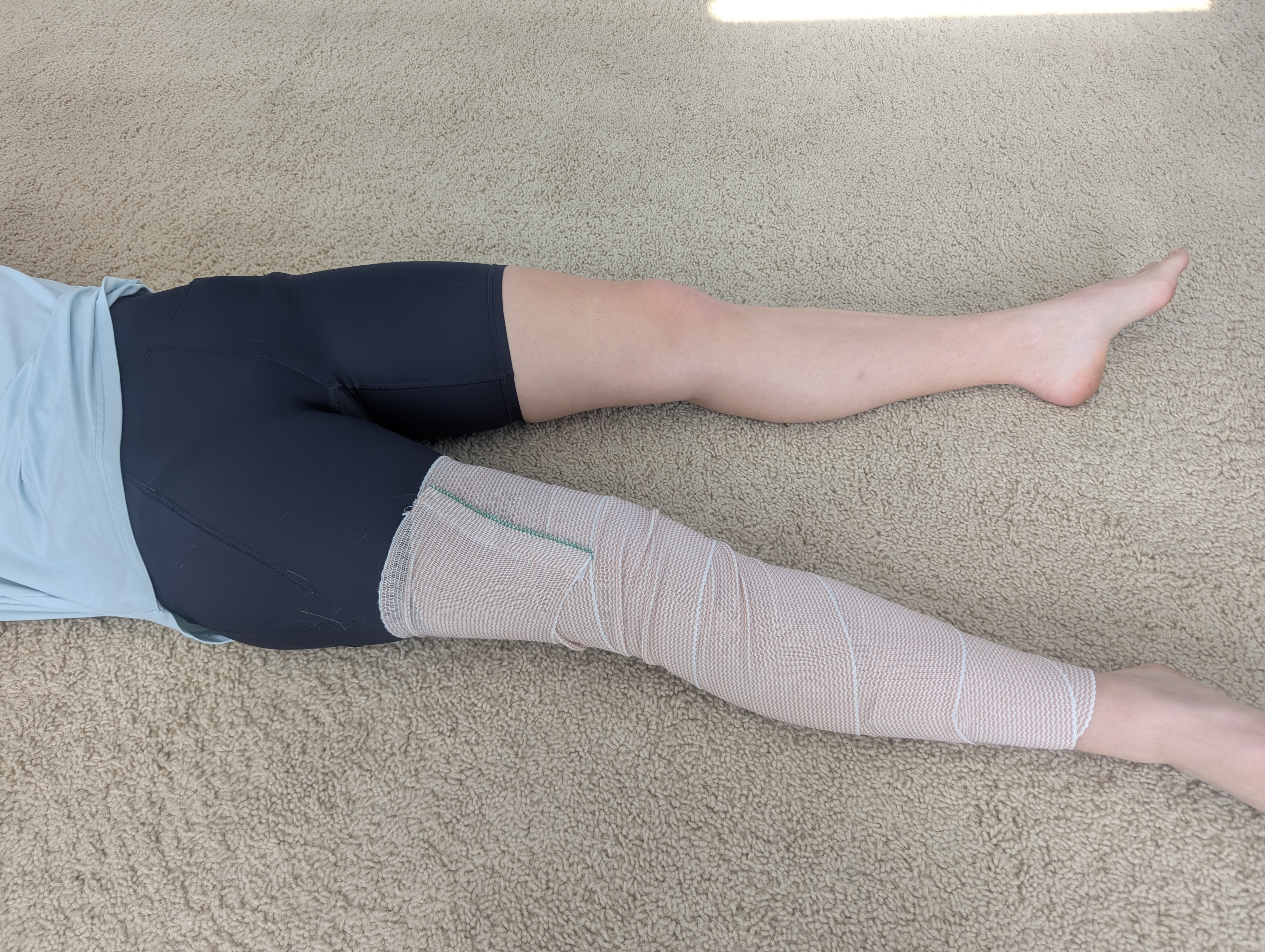
When wrapping an elastic bandage on an injured area, start farther from the heart and move toward the heart. This helps push swelling in the direction where it will be picked up by bigger lymph vessels.
Follow these steps:
Start at the joint below the injury.
Wrap upward toward the heart.
Overlap each layer of the bandage by about half the width of the wrap.
Continue wrapping until you pass the injured area.
Any extra bandage can be left loose.
After wrapping, check the fingers or toes below the bandage. Make sure they still have normal color, warmth, and feeling. If they become cold, numb, or darker colored, the bandage is too tight.
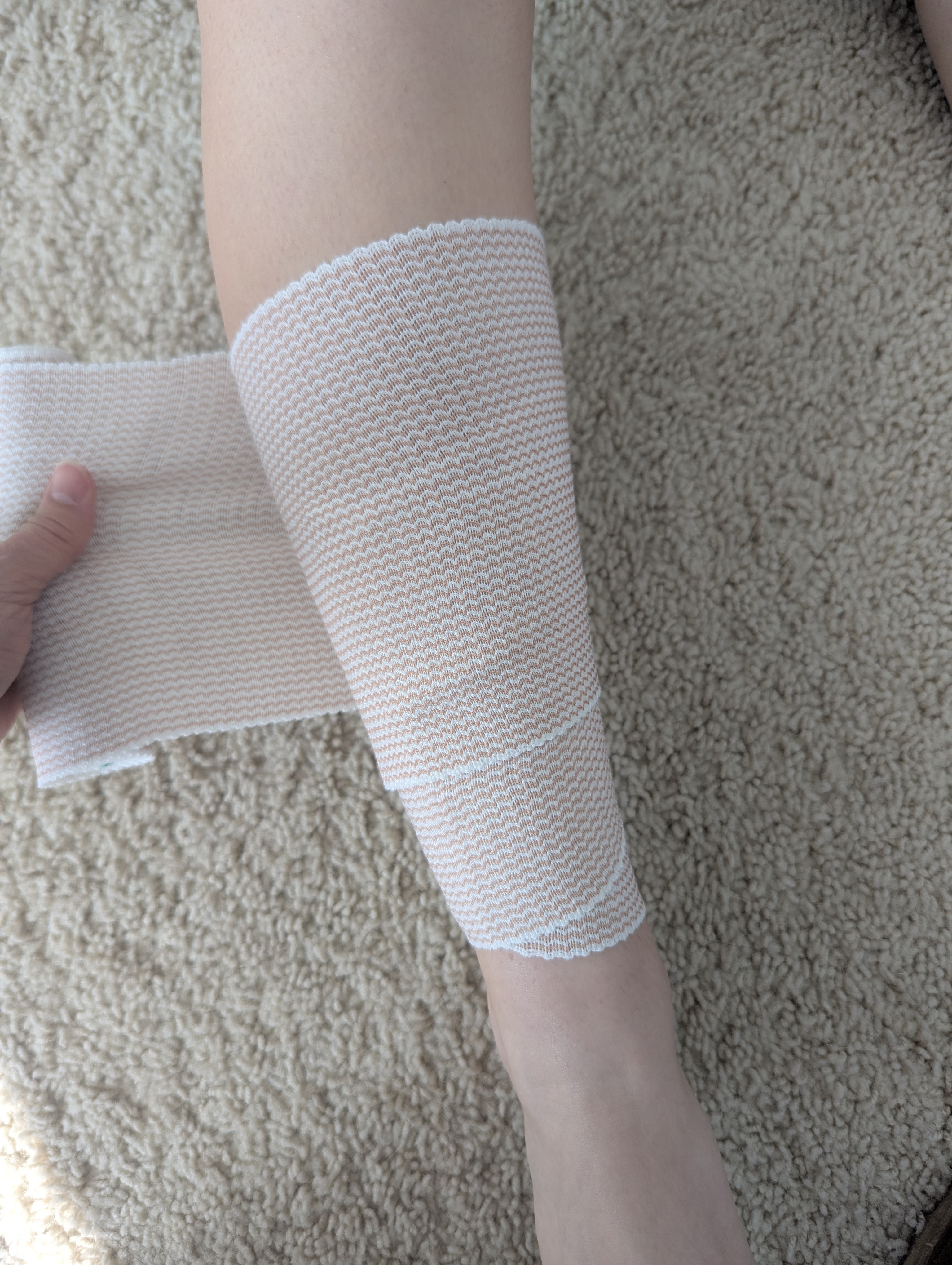
Where to Start Wrapping
For common injuries:
Ankle: start at the toes
Knee: start at the ankle
Wrist: start in the hand
Elbow: start at the wrist
Choosing the Right Size Elastic Bandage
Elastic bandages come in different widths and lengths. This makes it easy to find one that fits almost any body part. It’s a good idea to keep several sizes at home for easy access.
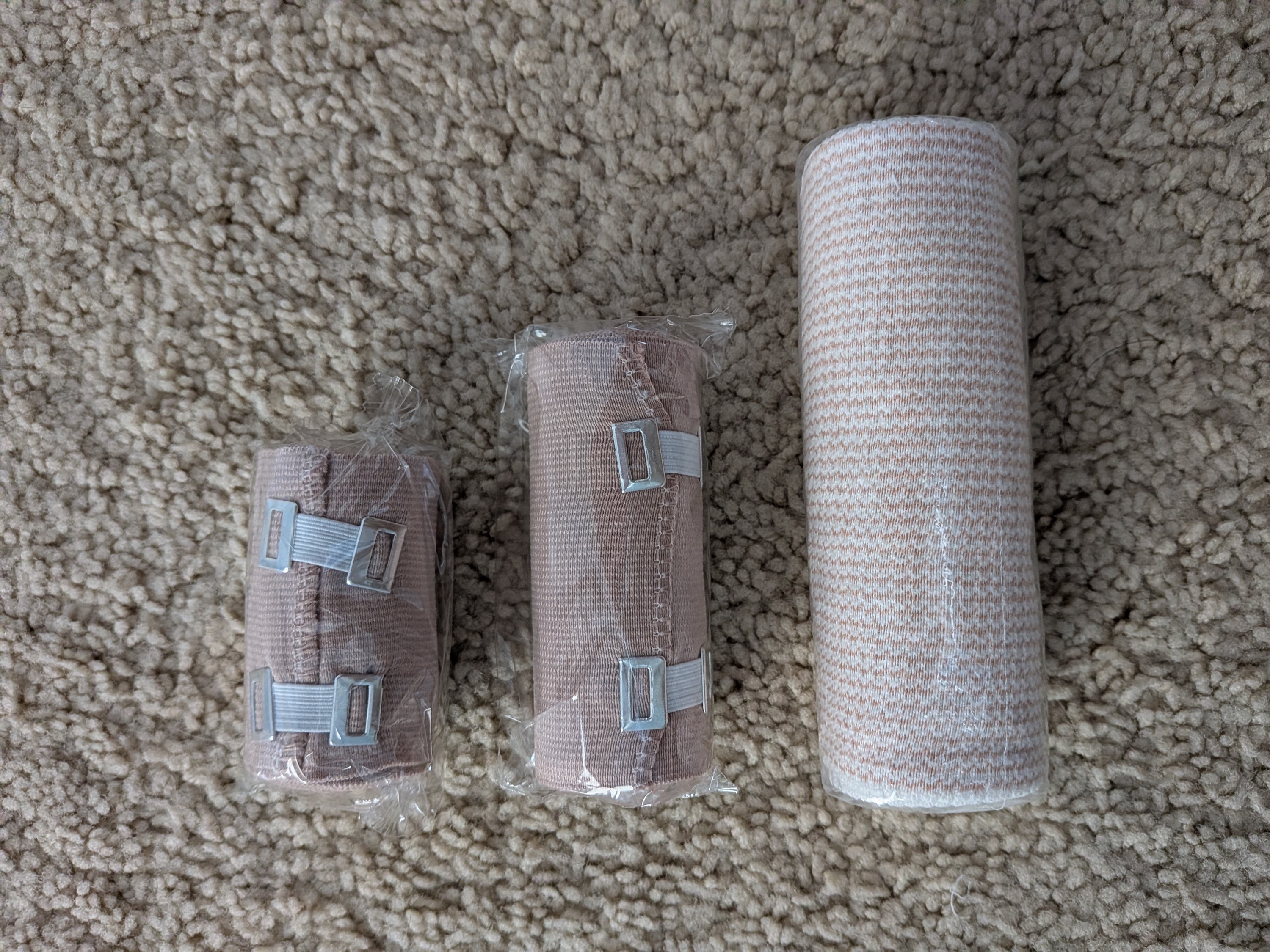
When Should You Use an Elastic Bandage?
Elastic bandages are most helpful right after an injury and during the early stages of healing. They work best for injuries that cause swelling, bruising, or mild joint instability.
You may want to use an elastic bandage for:
• Ankle sprains
• Knee sprains or swelling
• Wrist sprains
• Muscle strains (like hamstring or calf injuries)
• Deep bruises
• Mild joint instability during recovery
Compression helps reduce swelling and provides gentle support while the injured tissues begin to heal.
Elastic bandages are especially useful during the first 24–72 hours after an injury, when swelling tends to increase the most.
Elastic bandage tips:
#1 - Cheap elastic bandages are like cheap diapers ... not worth the money! They stretch out quickly and become worthless. More expensive bandages last much longer and can be used for more than one injury.
#2 - Wash an elastic bandage in the washer, but lay it out to dry, so it keeps it's shape.
SPORTS PARENT QUICK INFO
If swelling appears after an injury, compression should be applied as soon as possible.
Using an elastic bandage early can:
• Slow bleeding into the tissues
• Reduce swelling
• Decrease pain
• Speed up recovery
Just remember: firm, not tight.
If fingers or toes become cold, numb, or pale, loosen the bandage.
FREE GUIDE!
How to Care for ANY Sports Injury in the Crucial First 24-72 Hours
In this free guide, I walk you through how to tell if an injury needs immediate medical care and give you simple and easy step by step instructions for what to do at home for any other injury during this important time. I’ll also give you some tips for how to decide what comes next, based on the signs and symptoms you’re seeing with your athlete.
Don’t get lost in stress and worry about your athlete’s injury or ignore it and hope it will just go away. Grab my FREE GUIDE today to level up your ability to take care of your athlete!